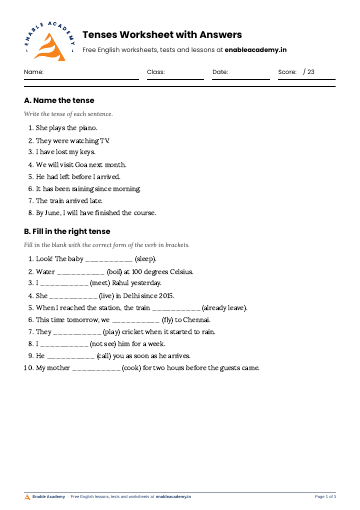
Tenses Worksheet
23 questions
Name the tense, fill in the right tense of the verb, and correct mistakes across all twelve English tenses.
21 printable grammar and reading worksheets with answers, free to print or download as PDF
Class 7 English moves to the perfect continuous tenses, the past perfect and the future perfect, conditional sentences, question tags, active and passive voice and reported speech, with vocabulary on phrasal verbs, prefixes and suffixes, homophones and figures of speech. Writing covers stories, diary entries, notices, informal letters and essays.
Each worksheet below has 20 to 30 questions, a full answer key and a PDF to print. Start with the topics your child is studying at school; each card also links to the lesson that explains the rules.
Class 7 completes the tenses with the present perfect continuous (has been waiting), the past perfect (had left) and the future perfect (will have finished), with a mixed worksheet to choose between them.
23 questions
Name the tense, fill in the right tense of the verb, and correct mistakes across all twelve English tenses.
26 questions
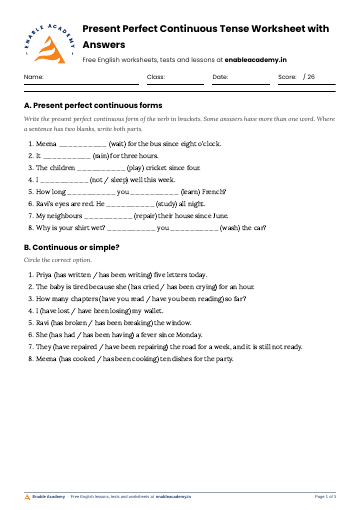
Have/has been + -ing, for and since, present perfect continuous vs simple, and corrections.
26 questions
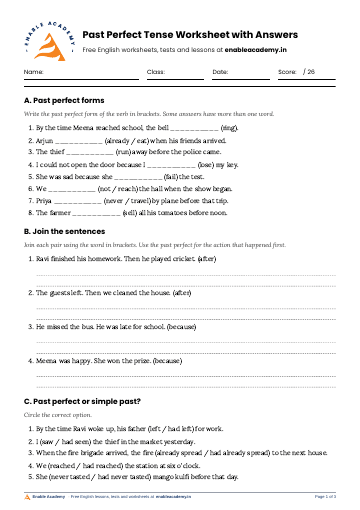
Had + past participle, joining sentences with after and because, and past perfect vs simple past.
Learn: Present, Past and Future Perfect Tense: Rules and Examples
24 questions
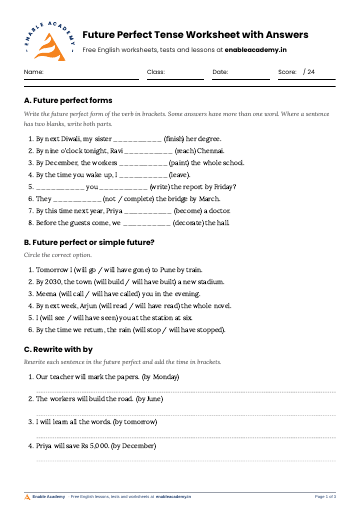
Will have + past participle, with by and by the time, and future perfect vs simple future.
Learn: Present, Past and Future Perfect Tense: Rules and Examples
Students use modals for advice, duty and possibility, helping verbs in questions and negatives, subject–verb agreement in tricky cases, and transitive and intransitive verbs.
25 questions
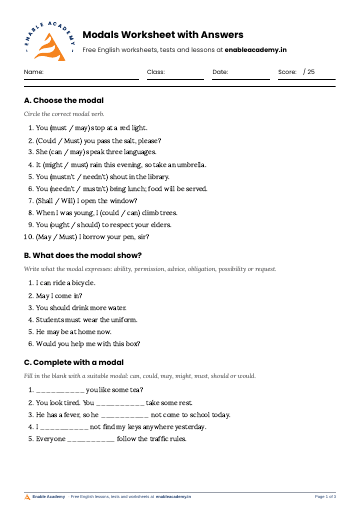
Can, could, may, might, must, should, would and more, what each modal shows, and common modal mistakes.
Learn: Modal Verbs for Beginners: Ability, Permission, Advice and Possibility
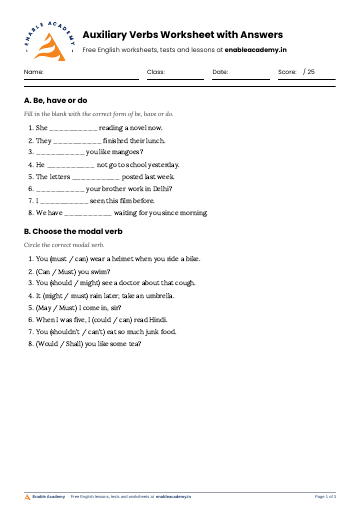
25 questions
Be, have and do as helping verbs, modal verbs like can, must and should, questions and common mistakes.
Learn: Modal Verbs and Auxiliary Verbs: Uses, Examples and Exercises
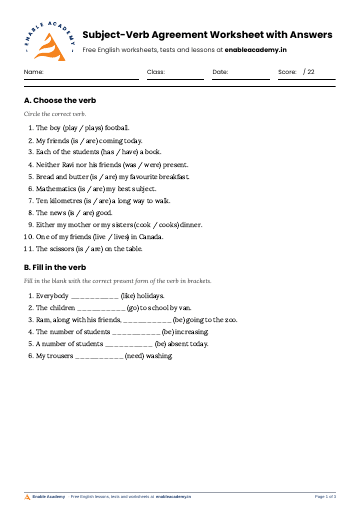
22 questions
Singular and plural subjects, each, either, neither, collective nouns and common mistakes.
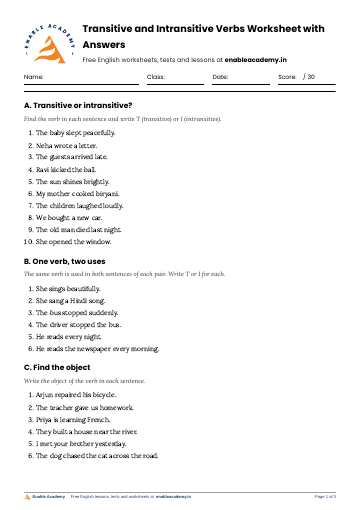
30 questions
Identify T or I, verbs that can be both, find the object, ergative verbs and common errors.
Learn: Transitive, Intransitive and Ergative Verbs with Examples
Determiners such as each, every, few and a little, degrees of comparison, and prepositions of time and place that are easy to mix up (in, on, at, since, for).
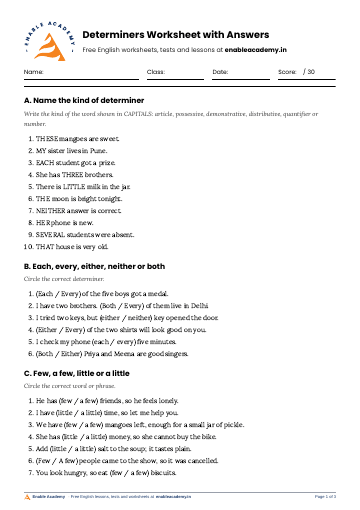
30 questions
Kinds of determiners, each, every, either, neither, both, few and a few, this and that, and corrections.
28 questions
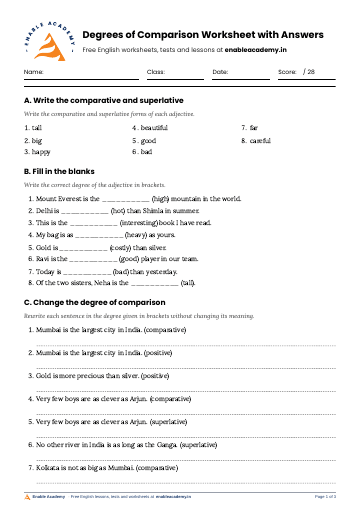
Comparative and superlative forms, fill in the blanks, change the degree of comparison.
Learn: Degrees of Comparison: Examples and How to Change the Degree
28 questions
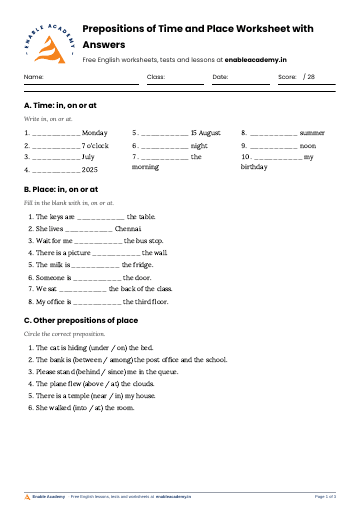
In, on and at for times, days, dates and places, other place prepositions and errors.
Learn: Prepositions of Time and Place: In, On, At with Examples
Sentences grow more complex: active and passive voice, direct and indirect speech, phrases and clauses, conditional sentences with if, and question tags (isn’t it?).
23 questions
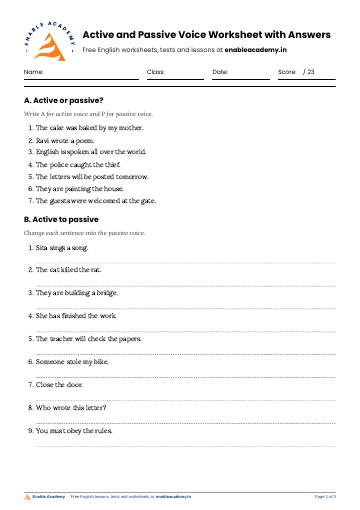
Spot the voice, change active to passive and passive to active, and fix mistakes.
25 questions
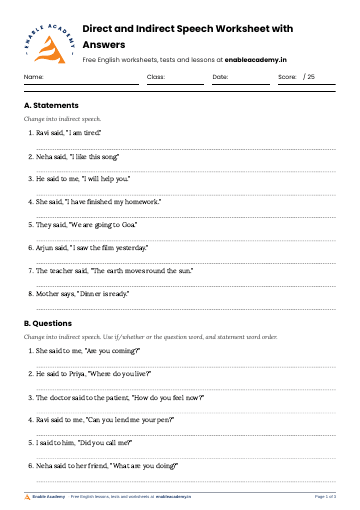
Change the narration of statements, questions, commands and exclamations, and indirect to direct.
Learn: Direct and Indirect Speech Rules (Narration Change) with Examples
26 questions
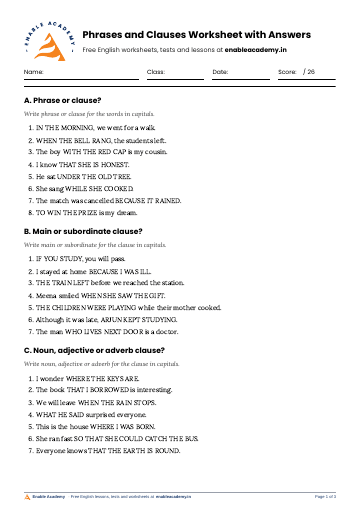
Phrase or clause, main or subordinate clause, noun, adjective and adverb clauses, and joining.
28 questions
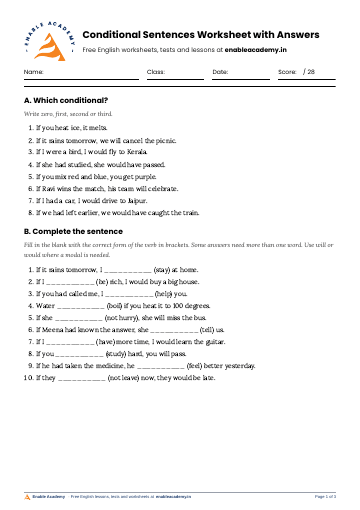
If clauses (zero, first, second and third conditional), unless, and correcting common mistakes.
27 questions
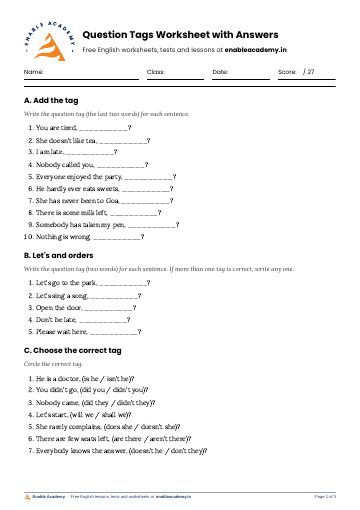
Tricky tags like aren't I, let's, imperatives, nobody, everyone, hardly and never, and corrections.
Phrasal verbs like put off and look into, prefixes and suffixes that build new words, homophones such as their, there and they’re, and figures of speech like simile and metaphor.
28 questions
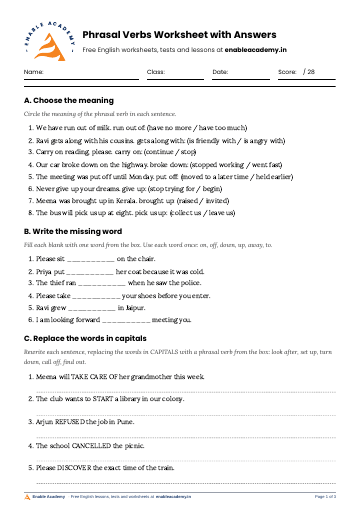
Meanings, missing particles, replacing words with phrasal verbs and the right place for the object.
30 questions
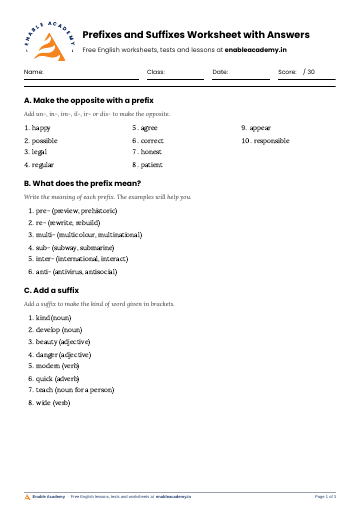
Make opposites with un-, in-, dis- and more, prefix meanings, and forming nouns, adjectives and verbs.
28 questions
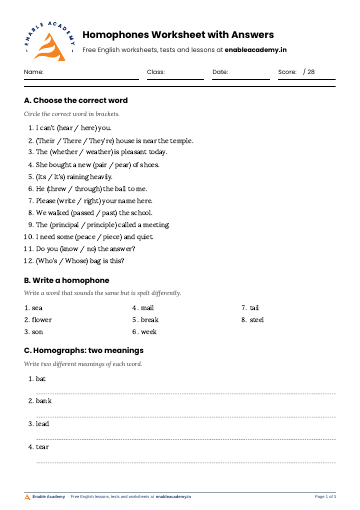
Choose the right word (their, there, they're), write homophones, homograph meanings and correct the mistakes.
21 questions
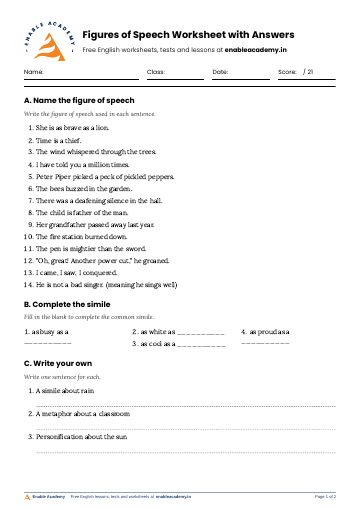
Identify simile, metaphor, personification, hyperbole, oxymoron, irony and more, and complete similes.
Learn: Figures of Speech with Examples: Simile, Metaphor and More
Two unseen passages in exam style: a discussion of plastic, why it became a problem and how to use it wisely, and a passage of facts on Chandrayaan-3’s landing near the Moon’s south pole.
23 questions
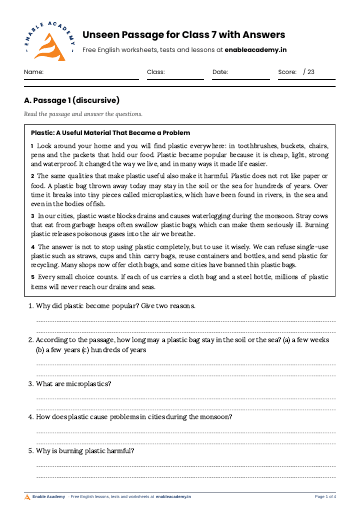
A passage on plastic and one on Chandrayaan-3, with 23 questions and answers.
Learn: Reading Comprehension for Class 3, 4 and 5: How to Answer
Worksheets build accuracy; speaking and writing grow fastest with a teacher. Our Junior English Level 2 course (ages 11–15) teaches students to organise their ideas and write and speak with clarity: essays, speeches, debates and higher-level grammar: 12 live one-hour classes a month, in a batch of just 1–3 students, online on Google Meet. ₹2,500 a month.
Enquire about Junior English Level 2Free demo class before you enrol. See course details